

Centre should bestow special attention
on Kerala’s unique issues: P J Joseph
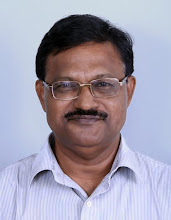
The Government of India should pay special attention to Kerala’s unique developmental issues and sanction projects to uplift the people, according to P J Joseph, chairman of Kerala Congress as well as Gandhiji Study Centre.
He made this plea at a “Walk-the-Talk” programme with John Mary for a television channel the other day, on completion of his road show from Mumbai to Kanyakumari, campaigning for a high-speed rail-road corridor from Mumbai to Kanyakumari covering the States of Maharashtra, Goa, Karntaka, Tamil Nadu, Pondicherry and Kerala. We should live up to the concept of a “strong Centre and satisfied States” .
Food security should be ensured for Kerala. Large areas of paddy fields are lying uncultivated. There is shortage of food materials. Prices of good grains are skyrocketing. Steps should be taken for self-sufficiency in food materials. Kerala is lacking in rice, milk, eggs, vegetables etc. Let us not think that everything can be purchased from elsewhere. Forty per cent of the people do not have nutritious food, a large number of people do not have houses of their own.
Rivers are withering away, streams and other water sources are drying up. Large-scale sand-mining has caused depletion of the water table and water storage.
He said the mind-block about high-speed trains should be removed. Japan introduced bullet trains in 1964. Most of the European countries, Korea, China and others have high-speed trains.
Joseph recalled that his train journey from Thiruvananthapuram to Kannur 25 years ago. The speed remains almost the same even now. There may be one and a half hours’ reduction in the journey time now.
The Government of India has already sanctioned Mumbai-Delhi and Delhi-Kolkata high-speed freight corridors. The concept has already been introduced in the country. Therefore, we must have the facility through the west coast as well.
Joseph said when he was PWD Minister in the E K Nayanar Government, the Union Government was approached for four-laning of the National Highways in Kerala and inclusion of Kerala stretches in the Golden Quadrilateral.
Later RITES was entrusted with the task of preparing a strategic project for road development of 2,800 kms. The Planning Board, and the Finance Department had objected to the proposal. But Nayanar stood firm and the project was submitted to the Centre. Ultimately, the Rs 1,600 crore KSTP project came into being with World Bank assistance. The work should have been completed in 2005. If Pati-Bel Company, which undertook the work was paid Rs 17 crore earlier, the present expenditure of could have been saved by Rs 200 crore. Moreover, Pati Bel could not take up the rest of the work on time. Consequently, escalation of expenditure would cause a further loss of Rs 500 crore.
Joseph maintained that the power of the Finance Department to veto projects of various departments should be taken away. Once the amount is included in the budget, the respective departments should be allowed to spend the money. Saving the allotted money without spending would hit the developmental projects adversely. That is any way bad financial practice.
The practice prevailing in various States such as Maharashtra, Gujarat, Karnataka, Andhra Pradesh, Tamil Nadu etc should be followed in Kerala. The Chief Minister should seriously look into the issue.
Regarding the Golden Quadrilateral, Joseph asked why the mega project stopped at Chennai, after Mumbai-Delhi, Delhi-Kolkata and Kolkata-Chennai stretches were completed.
Now with regard to rail developments, a comparative study should be made. As per populatation figures, Kerala should get at least 3000 km of railway line. Equality can be claimed to some extent after adding at least 1,000 km of double line.
With the operationalisation of LNG terminal, there would be daily transportation of 2000 50-60 tonne trucks from Mangalore, Salem etc to Kochi. There should be a separate road for taking care of the huge volume of high-voltage traffic.
Joseph pointed out that there would be no problem of securing funds for the high-speed rail-road corridor.
Joseph, who is the pioneer in introducing organic farming in Kerala, undertakes bio farming in 10-15 acres. He rears 60 cows. Through the efforts of Gandhiji Study Centre, 20,000 families of farmers have converted themselves into organic farming in Idukki .district. Kerala should be transformed into an organic farming State. It is possible to infuse food security, increase milk production and ensure nutritious food for all. Each family should have a cow, which would be useful for organic farming operations.
Gandhiji Study Centre has adopted Mullankolli and Aralam villages. The attempt is to double the income of the households within a period of three years.
Joseph is not worried about his being out of the Cabinet. This is a blessing in disguise. He is now able to concentrate his attention on organic farming, development and positive culture.
Friday, February 08, 2008

O J’s Corner
Think big for high-speed
rail-road corridor
India is a big country and its people are not weaklings. Let us not think for a moment that mega rail-road projects are beyond our capacity. Our forefathers were a bit reticent to acknowledge modern technology and development. But that attitude reflected only initial fear. Later they were quick to come to terms with modern developments like railway facilities.
Ernakulam-Kottayam and Kottayam-Kollam railway stretches were “terrains criss-crossed by perennial streams, hills and dales and backwater creeks”,according to T A Joseph, who was then the General Manager of Southern Railway. One can imagine the amount of cynicism expressed by various people those days to dream about materialisation of the metre-gauge line. None other than the-then Prime Minister Jawaharlal Nehru laid the foundation stone for the line on December 24, 1952. Traffic between Kottayam and Ernakulam was opened in October 1956 and that between Kottayam and Kollam two years later. The line strengthened the physical, mental and moral integration of Travancore, Cochin and Malabar. The rail line ensured state integration more than half a century ago.
Now we have to look for national integration through railways. High-speed bullet trains have come to stay in various parts of the world. We cannot look askance at the fast developments overtaking the world. We have to be part of the larger global picture emblazoned before us. China has fly-over road length than the US now. We have not started devising multi-deck fly-overs for uninterrupted high-speed road traffic, which developed nations have made available for their people.
We don’t have to be cynical about launching a high-speed rail-road corridor worth more than Rs one lakh crore. The daily loss or gain in the Bombay Stock Exchange or the National Stock Exchange amounts to far greater figures than this estimate. Don’t we recognise our own financial strength? What is the harm in availing long-term loans from international funding agencies like Japanese Bank for International Co-operation at negligible rates of interest?
Major political parties may not find it easy to moot a project like this from Mumbai to Kanyakumari passing through Maharashtra, Goa, Karnataka, Pondicherry, Tamil Nadu and Kerala, for fear of negative thinking from their own cadres elsewhere. But they can offer their weight behind the proposal put forward by P J Joseph. Or they can rechristen this as Jammu-Kanyakumari high-speed rail-road corridor. With the North-South Express Highways and the Golden Quadrilateral and link roads together, there would be a network covering the entire country.
Now Minister of State for Railways R. Velu has remarked that high cost and safety aspects may come in the way of setting up the corridor. P J Joseph has meaningfully repudiated this view. First of all, the concept of high-speed rail line has already been cleared by the Union Cabinet by way of Delhi-Mumbai and Delhi-Kolkata infrastructure and freight corridors. The cost factor, of Rs 50 crore per km, has not come in the way of sanctioning these mega projects. Mr Velu himself is clamouring for a high-speed line between Chennai and Coimbatore. As many as 40 MPs from various States have signed the request for the Western corridor. The Prime Minister has already ordered for a techno-economic survey. The architect of Konkan Railway, Delhi Metro and proposed Kochi Metro, E.Sreedharan, is optimistic about this corridor.
Let us lend our weight to P J Joseph’s effort to fulfil the dream project, which would provide all-round development for the entire country.
Sunday, February 03, 2008
O J’s Corner
The rich doesn’t know how to spend,
the poor has nothing to live for
I was thinking about the assertions made by President Pratibha Patil, Prime Minister Dr Manmohan Singh, and Bill Gates last week on what can be said as the state of the economy.
There are concerns for the rich and the poor, for the haves do not know how to spend accumulated wealth, and the have-nots are bereft of resources to make both ends meet. It would appear as though there is no meaning for either of these conditions, unless some sort of synergy is brought in for the survival of all.
President Pratibha Patil has, on the eve of the Republic Day, called for taking care of the disadvantaged sections. Prime Minister Manmohan Singh at a press conference with French President Nicolas Sarkozy at New Delhi that the country’s economic foundation was strong to tide over the global fall-out of US recession. Bombay Stock Exchange and National Stock Exchange had gone into a tail-spin and then recovered partially. Sarkozy had also spoken about the resilience of the banking system in his country to remain unaffected in spite of $ 7.5 billion fraud at one bank.
Fair enough, the economies are strong. But how will the concerns of the very poor and the downtrodden, who find it difficult to muster Rs 20 for a kilogramme of rice for a day, be addressed?
In the times when we are launching out into outer space, the moon, the planets, the solar system and the universe, let there be a mechanism to offer minimum survival resources to the lesser mortals.
That there is no meaning in life for even the super-rich has been stated by Warren Buffet, the second richest person in the world. “It is easier to create money than spend it”, he had said before parting with 85 per cent of his $ 44 billion wealth to the Bill and Melinda Gates Foundation in 2006. It seems Bill Gates himself had been convinced about the futility of ultra-richness. At least he and his wife Melinda were on the vanguard of acts of philanthropy. They were giving money back to the society by focusing on world health in fighting diseases such as malaria, HIV/AIDS, tuberculosis and taking measures to reduce extreme poverty.
Let us go through the observations made by Bill Gates at the World Economic Forum at Davos. The world is getting better, but it is not getting better fast enough, and it is not getting better for evenyone. He has urged business enterprises to work with governments and non-profit groups in a new kind of capitalism to stem global poverty and stir up more technological innovations to rope in those who were left behind.
True, the government of India has proposed a scheme to take care of farmers’ debts to the tune of Rs 65,000 crore. Will action follow forthwith? Farmers’ suicides, people’s inability to find livelihood, healthcare scenario remaining bleak, to name a few worries, do not go well with a flourishing and over-rich system. Deliberate steps to liberate the extremely poor would balance the economy, without which there would be no solace for anyone.
War against mosquitoes a must
Kerala has become the repository of mosquito-generated diseases. In 2007, chikungunya, proved to be fast escalating. Even units of the Armed Forces were called in to contain the disease. In 2006, Alappuzha district was hit hard. Last year, nearby Pathanamthitta and Kottayam districts were paralysed by this disease. Of course, other districts such as Thiruvananthapuram, Kollam, Ernakulam and Idukki were also noted for the attack of chikungunya. The normal life of a majority of people living in the affected districts was virtually crippled.
Dengue fever, Japanese encephalitis, malaria and filarial have all been fatally troubling the people of Kerala for quite a long time. But the onslaught of chikungunya has had a debilitating effect. The affected people were not able to move around, let alone report for work in fields or offices. It has been a life double bent, by way of physical disability and denial of income as the victims were not able to work. The disease affects the victims for months together.
Alas, the disease has escaped remedial treatment. The patients were being given paracetamol and allied medicines to alleviate their pain. There is no system of vaccination or inoculation to prevent or contain the disease.
Chikungunya permeates human bodies as it pleases, untrammeled by the ferocity of any medicine. Of course, Rajiv Gandhi Centre for Biotechnology in Thiruvananthapuram, has been attempting to develop a vaccine against the disease.
The only plausible solution lies in eradicating mosquitoes which carry the virus. Decades ago, when malaria became widespread, DDT was widely used to destroy mosquitoes. Now DDT appears to be harmful for human beings. Various countries are experimenting with methods to develop organic insecticides and disinfectants. Many such products are available also. Therefore a gigantic and all-encompassing project should be evolved and executed meticulously, covering all the districts of the state for destroying mosquitoes. Now is the proper time to evolve strategies as mosquito-generated diseases envelop the state during June-November period.
In fact, the problem of wastes, impurities and rubbish lying heaped at almost all places in the state is a revolting experience for all of us. We have only tinkered with this gargantuan issue. There should be meticulous programmes to take care of every inch of land and water spaces in the matter of managing wastes and impurities. Impurities-free Kerala should be the target, which should be achieved without delay.
The government, the local bodies, educational institutions and non-governmental organisations, should be able to drive out the mosquito menace. We have been successful in implementing the total literacy programme. Therefore, it should be possible to eradicate mosquitoes, provided we have the compendious will to do it.
Wednesday, January 23, 2008
O J’s Corner
No alternative to rail-road infrastructure
Developments on the earth are fast overtaking us, but we are yet to catch up with many of the mind-boggling user-friendly achievements, which have become the order of the day elsewhere. Often we are stymied by mind-blocks of negativity. It is high time we shed the ruinous tendency and whole-heartedly go in for massive infrastructure installations, facilities and services essential for mankind in the third millennium. Services are becoming available at the press of a button. No one can think about falling back to the bullock-cart days. My father’s generation was witness to discerning changes in the transportation sector. They had the bullock-carts, some even had horse-drawn carriages for traveling from one place to another. Bus transport was funny. Those days pneumatic tyres were not there. Bus wheels were fitted with blocks of rubber, which were dragged on by a primitive engine. When the bus stopped, the cleaner was ready with a rod to insert in a hole in front of the bus, with which he rotated the shaft. Now we have scooters with press-button engine starters.
We are aspiring to reach the moon soon, but we have largely ignored the high-speed road and rail travel facilities existing in developed countries. Even the train bogies are antediluvian, compared to Euro standards. When do we think about absorbing some of these modern facilities? Owing to concerns about greenhouse effect, carbon emission and global warming, these modern amenities are largely harmless, issue-wise.
K M Roy, in his column, “With an open mind”, has referred to the knotty traffic problem caused by a conference of doctors held in Kochi. About 10,000 doctors from various parts of the country had converged on the Gulfar International Convention Centre situated on the National Highway Bypass in Kochi. Probably this is the broadest road stretch in Kochi. About 5,000 cars carrying participant-doctors from various places got catapulted themselves on this road stretch, creating a traffic snarl of seven hours unheard-of earlier. Buses, other cars, two-wheelers etc which had to convey students, housewives and the general public to the hinterlands were hamstrung by the traffic block. They resorted to picketing. The district administration and the police top-brass stood mute witness to the clatter of crowds, cars, creatures and care-takers. If things move on like this , we have already fallen into the “Chakravyuha” faced by Abhimanyu.
Kochi has become an international hub on many counts. Smart City, Info mammoths, trans-shipment container terminal, LNG terminal, airport, sea port and the like cry for breathing space for all those working for these institutions, the general public and outlets for people who travel to and fro the hinterlands. Kochi cannot afford to provide accommodation for all. People will have to stay in places close to Kottayam, Alappuzha and Thrissur districts and travel for work.
There is no way out for us, unless new avenues are built. This reminds one of the vociferous campaign undertaken by P J Joseph for high-speed rail and road corridors on the western sector and interlinking of golden quadrilateral and express highways criss-crossing the length and breadth of the country. Plan ahead and catch up with the developments in tune with the times.
Friday, January 18, 2008
P J Joseph’s campaign chariot rolls from
Mumbai to Kanykumari for
high-speed rail-road corridor
The bugle was sounded in the land of Chhatrapati Shivaji, at Hutatma Chowk, in Mumbai, the very place where hundreds of people had sacrificed their lives for unified Maharashtra, for a national cause mooted by P J Joseph for the realisation of the high-speed Mumbai – Kanyakumari rail-road corridor.
The giant project would cover states on the east coast, Maharashtra, Goa, Karnataka, Tamil Nadu and Kerala. The campaign was flagged off by celebrated film director and social activist Mahesh Bhatt.
Mahesh Bhatt was convinced that this campaign would prove to be a historic moment. When the project takes off, those who have given shape to the mega idea and those who worked behind the campaign would ever be remembered, he added. People would have to dream about big development.
Former Railway Minister Ram Naik who addressed the gathering reminisced that the venue of the campaign roll out was the fighting field where more than a hundred lives were lost in connection with the unified Maharashtra cause.
The vehicle jatha commenced its journey on January 12, the day of Swami Vivekananda Jayanti. It was meaningful that the campaign was for a mega project linking Mumbai with Kanyakumari, famous for its Swami Vivekananda memorial.
People and leaders cutting across party line participated in the inaugural function and subsequent receptions at select points en route. A large number of party workers from Kerala and activists of Malayali associations, organisations of Keralites settled in Mumbai and local enthusiasts had converged on the Hutatma Chowk for the flag-of ceremony.
MPs P C Thomas and Francis George, Kerala’s PWD Minister Mons Joseph, and others were present.
P J Joseph said that the MPs had submitted memoranda to Prime Minister Manmohan Singh and Railway Minister Lalu Prasad Yadav. The Centre has already ordered for a techno-economic survey.
In European countries and Japan, bullet trains are available for long-distance journey. On an average bullet trains cover 1,000 kms in eight hours. Our Rajadhani Express trains maintain 70 kms per hour speed in India. There should be a concerted effort from all corners to introduce bullet trains when journey to Kerala would be less time consuming.
Mohan Rawale, MP from Maharashtra, MLA Annie Shekhar, BMC corporator Vinod Shekhar, CITU state secretary P R Krishnan, Minorities Commission vice-chairman Abraham Mathai and V K Khader were among those who graced the inaugural function.
From Kerala, Former Minister T U Kuruvilla, MLA, Surendran Pillai, MLA, former MP Vakkachen Mattathil, Antony raju, John K Mathews, K F Varghese, E P Mathew, Jacob Abraham, Mathew George, D K John, Kulathoor Kunjukrishna Pillai, Thottathil Mohamed, Shibu Thekkumpuram, Mathew Kunnappally, Raju Neduvampuram, advocate Chandralekha and a host of others were among the participants.
The entourage was received with fanfare at Thane, Wagle Estate, Vashi, Kerala House, Lonavala, Pune and other important points.
The jatha proceeded along Pune, Ratnagiri,Panaji and Mangalore. It would cross Kasargod in Kerala and proceed to Kanyakumari where the concluding function would be held on January 31.
Sweet dreams about bullet trains on the east coast
We speak about materialising our dreams. But do we dream?
The world is developing at a fast pace. China and India are poised to be big players in the world economic sphere in the next decades. But India has to catch up with several respects to achieve a developed status. Particularly, our transport system, among other things, have to be developed in tune with the times. Our long-distance trains carry us from one destination to the other taking many days for the journey. But the world has changed in the matter of rail travel.
By constructing a high-speed corridor, bullet trains can be pressed into service. Bullet trains can travel at a speed of over 500-580 kms per hour. True, it cannot run on our existing rails. Building high-speed rail corridor is expensive initially. But over a period of time, when tourists and the general public use them, the system would be profitable. And the nation should be proud of providing modern amenities on par with world facilities.
In this connection, one should salute the high-speed rail-road-corridor, mooted by P J Joseph connecting Mumbai with Kanyakumari and covering five States of Maharashtra, Goa, Karnataka, Tamil Nadu and Kerala on the east coast.
Mind you, high-speed train-systems have been pressed into service in the US, UK, France, Germany, Japan, China, Italy, Argentina, Brazil, Thailand, South Africa, Morocco, Thaiwan, Spain, Belgium, Korea, Switzerland, Turkey, Sweden, Malaysia etc.
The high-speed passenger corridor, for which P J Joseph has already launched a vehicular campaign from Mumbai to Kanyakumari, from January 12 and scheduled to conclude on January 31, would connect the tourist centres on the east coast. There are plenty of tourist spots en route. Places of interest include Mumbai, Goa, Mangalore, Kappad, Kodungalloor, Kochi, Alappuzha, Kollam, Vizhinjam and Kanyakumari.
On a rough estimate, the high-speed rail and parallel road corridor from Mumbai to Kanyakumari would cost about Rs one lakh crore. This is not an impossible task provided we would be able to rope in personalities like E.Sreedharan who was instrumental in constructing the Konkan rails and the Delhi metro. Funding would also not be a problem if agencies like Japanese Bank for International Co-operation is accessed. International agencies offer loans at 0.5 per cent interest spread over 25 years.
This east coast corridor would benefit 25 crore people belonging to five states. The railways’ income would be going up considerably, if the system is put in place.
The magnetic levitation trains in Japan ply at a speed of 580 km per hour.
No doubt, we have to catapult ourselves into the realm of the bullet train system
Saturday, January 12, 2008
O J’s Corner
Campus killings
Children carry the attitude and behaviour evolved at home to campus and conduct themselves abominably, leading to even unabashed killings.
The latest series of murder of fellow students by wayward wards of mostly wealthy parents betray a bomb ticking at the door-step of culture and civilization alien to ours. No doubt they have gone astray. But the dangerous trend has to be nipped in the bud.
A carrot-and-stick policy is essential to deal with the situation. Conscientisation of students as well as parents with the involvement of teachers, counsellors and the society at large would go to a great extent to create a harmonious climate on the campus. The erratic ways of students indulging in opulence and concomitant high-handedness should be sternly dealt with.
Rabindranath Tagore’s Shantiniketan was the scene of blood-shed the other day as a third-year under-graduate girl student of Vishwabharati University was shot dead apparently by a jilted lover.
Earlier in January, a school student shot his junior to death at a Government school in Satna, Madhya Pradesh. In December, a 14-year-old student was shot dead in Gurgaon in Haryana, bordering Delhi.
These are shocking, horrifying and tragic incidents. This kind of grotesque behaviour, unheard-of in Indian conditions, should be an eye-opener. The environment in which children are growing up, under the influence of arms and money, should be scanned scientifically to correct the situation.
Money and status of parents in society are the main criteria to secure admission in top schools. Most of the parents do not keep track of the conduct of their children in schools. They have no idea of the peers with whom the kids interact. Some of the students extend the attitude developed at home to the campus. They were encouraged to be harsh with their friends and acquaintances.
Mind you, the students spend only 25 per cent of their time in school. The rest of the time is spent at home. Which means parents have to act as counsellors.
Peer pressure, increasing over-emphasis on studies, need to excel, non-availability of parents for interaction etc result in pent-up anger. The children do not know how to control anger. They direct it at anyone who comes their way. Aggressive behaviour is often transferred to children from parents. Adjustment problems, cultural shocks and attitudinal aberrations deviate children from positivity.
Take the case of ragging incidents at various educational institutions. Aggressive ragging is nothing but a sort of killing instinct. The victims are subjected to heinous cruelty in the guise of orienting the new entrants to campus life. Ragging which was intended to be innocuous strengthening of attitude to weather difficult situations has turned out to be abject cruelty.
Disharmony at home, lack of attention paid to children, disregard to their just demands, pressure to always study for best results, dearth of physical activity, sports and games, entertainment programmes, not even listening to music and the like make them taut, tough and rough.
Balanced diet and balanced behaviour should be provided to the children who constantly and unknowingly imbibe trends from their parents, who should therefore be careful.
Mullapperiyar issue should be eye-opener
The logic, or lack of it, on the part of Tamil Nadu in resolving the
Mullapperiyar dam issue defies all canons of reasoning. Its insistence should have been directed towards securing water from Mullapperiyar river. Tamil Nadu does not appear to be concerned about the safety of the dam or the impending danger of lakhs of people living downstream, stretching from Thekkady to Alappuzha. Tamil Nadu has lease right for 999 years over the water from the dam, which by now is more than 110 years old. No human being can be convinced that this dam, built in mud and lime, would survive 999 years.
Those who were responsible for drafting the wording of the lease agreement did not think that it necessary to have a specific clause for building a new dam and demolishing the antique dam. No one thought that in human transactions, anyone would oppose reconstruction of a dilapidated dam. When the agreement was renewed during the tenure of Chief Minister C.Achutha Menon, there was no re-thinking as the whole transactions appear to have been done on political expediency. Now when the dam’s condition is precarious, the Tamilians, in the same tenacity is opposing every move to have a new dam, amply supported by reports got readied with political clout at the Centre from time to time.
The life of a modern-day dam, built with the firmest infrastructure possible, is expected to be roughly 50 years. Let it survive for 100 years. But our antique structure is older and it is crumbling It has to be replaced. Delay tactics would only worsen the safety aspect of the dam, endangering precious lives.
The statistics provided by the Central Water Commission, culled out for the purpose of deposition before the Supreme Court underscores the need for urgent steps to tide over the dangerous situation. If there occurs a flash flood by some means (that is possible in times of unpredictable rain and thunder showers arising from global warming and melting of ice caps) and the water level goes beyond 136 feet, the overflow would be too risky. The ground portion where the water falls out would be thinning out and there are chances of being washed away endangering the dam proper.
The Supreme Court has been magnanimous enough to identify eight main issues involved in the Mullapperiyar dam issue. It should be possible for Kerala to insist on the non-safety aspect and get the issue thrashed out either through discussions or through the apex court. Dilly-dallying and stretching of time-frames, which is being pursued by Tamil Nadu, would imperil the situation further.
It seems Tamil Nadu belatedly agreed to have the leakage in the dam being studied in depth is a ploy to derail the deadline. Possibly, it could get the study process extended up to a year. It seems prudent to include other aspects in the study like the non-safety and old age of the dam proper. It is well-known that the earlier report submitted by the Central Water Commission was not impartial.
Mullapperiyar dam issue should be an eye-opener to the ruling dispensations in Kerala from time to time. While drawing up agreements for lease, there should be specific provisions for dealing with similar situations. One should not assume that the other side would see the human side of various aspects. Credulousness would cost us dearly.
Saturday, January 05, 2008
O J’s Corner
Braver than many men
Destiny’s Daughter Benazir lived up to the Bhutto legacy. She was braver than many men. That was why she chose to end her eight years of exile and return to her homeland amidst a lot of uncertainties. She might have been over-confident initially as she could strike a deal with Pervez Musharraf at the behest of the US. I wonder how serious allegations of corruption levelled against her necessitating her exile could be quashed by the rulers one fine morning. I cannot understand how “corrupt” leaders can be allowed to run way to foreign countries. That is with regard to the affairs of Benazir Bhutto and her husband Asif Zardari. Is Nawaz Sharif not a wrong-doer once he is outside Pakistan? If Bhutto was chaperoned by the US, Saudi Arabia apparently did the bidding for Nawaz Sharif. One way or other the leaders’ affairs are beyond ordinary laws. Which means not everything was above board. When one leader assumes power, it is good riddance for the former leaders. This is nothing but rustic ways, far away from the ways of democracy. But that is an aside.
Benazir saw her father Zulfikar hanged to death by tyrant Zia-ul-Haq. When her father was incarcerating in prison under death sentence handed down by the Pakistani military dictatorship in 1979, other members of her family were trying to flee the country. Benazir boldly flew back to Pakistan. Her confrontation with brutal Zia-ul-Haq cost her five years of her life in prison.
She saw one of her brothers, Shahnawaz, die in mysterious circumstances in south of France in 1985. Another brother, Mir Murtaza, was shot down outside the family home in Karachi by uniformed police in 1996.
When she was Prime Minister ( mind you, she was the first woman Prime Minister of an Islamic country!), she pursued a very active pro-Taliban policy, which was intended to have her sway over Afghanistan one the one side and secure strategic depth in its long confrontation with India over Pakistan. In all she spent thirty years navigating turbulent, sometimes extremely violent Pakistani politics.
Daughter of Destiny was the title she gave to her autobiography. Lately, she was willing to lead a battle against Taliban and al-Qaeda. It seems she was truly worried about lack of democracy and the mullah-manipulated politics in Pakistan.
Perhaps the Bhutto legacy would be carried on by her son Bilaval and ,if need be, two daughters. But it is a long time to come.
Pakistan getting destabilised is a real threat to India, and the world at large. Whatever the assertions of safety of nuclear weapons in Pakistan, the world’s deadliest terrorists are camping in that country. No one is totally controlling them. Ultimately, the US will have to act strongly against them one way or other. Otherwise, it would be a worse danger for them than that it witnessed in the twin tower tragedy in 2001.
Thursday, January 03, 2008
Grand finale to agriculture fair
O J George
Farmers had a feel of the explosion of knowledge available in the field. Children were drawn to the unending expanse of science wisdom. Giant-sized crops exhibited at the fair were the cynosure of the mela. Evenings reverberated with songs, dance and other entertainment programmes. Various stalls provided an ocean of information for the common folk. The 10-day farmers’ fair, which has by now become a by-word for the people all around, held under the auspices of the Gandhiji Study Centre chaired by P J Joseph, drew to a close on December 31.
It was a colourful festival, held on the sprawling campus of Newman College, Thodupuzha. The peculiarity of this festival, regularly organised annually since 1989, is that a permanent venue has been fixed at Thodupuzha. Gandhiji Study Centre’s first farmers’ fair was organised at Kottayam. Dr U R Anantamurthy, who was then Vice-Chancellor of Mahatma Gandhi University, had suggested that there should be a permanent venue so that the event would be anticipated by people and could be organised on a perennial basis. P J Joseph accepted the proposal and has been mobilising the agriculture fair single-handedly, as opposed to the subsequent fairs and exhibitions being got up by government, agricultural varsities and other organisations.
The all-inclusiveness of this fair has been noteworthy. Commoners can participate and even win prizes as a matter of right for their well-earned produce and meticulously reared cattle-heads. Information, participation and entertainment for the real sons of the soil, tillers and farmers, are being provided on a platter. That is the grass-roots dimension of the fair. There is a diametrically opposite involvement, which is intended to provide help to the commoners.
The latest developments in agriculture research and the findings of experts are incorporated in the mela. Scientists from agricultural universities, central agricultural research institutions, ISRO, Bhabha Atomic Research Centre, Rubber Board, Spices Board, fisheries institutions, Coconut Development Board, Department of Atomic Energy, agriculture department etc participated in various seminars, discussions and lecture-demonstrations. ISRO, Spices Board, Coconut Development Board, Oil Palm, Central Plantation Crops Research Institute, Central Tuber Crops Research Institute, Agirculture University, Farm Information Bureau, Amrita Institute of Medical Sciences, Kerala Police and various State Government departments etc had put up stalls showcasing their products, achievements and capabilities which are of use to the farmers, workers, students and the people at large. Private institutions also got an opportunity to display their products.
Seminars held on various days concentrated on farmers and debt relief, ornamental fish farming, inland water fish farming, water conservation
Friday, December 28, 2007
O J’s Corner
Victory of the mask
Masks were galore throughout Gujarat during election time. No wonder, Narendra Modi’s masks fetched for him a stunning victory in the flourishing State of Gujarat. And he has completed a hat-trick in winning for the third time. He could cast a magic spell over the people. He was a flamboyant son of the soil and could not be suppressed by any means.
His eyes are set for higher goals. He was feigning to be an epitome of humility, an act of masquerading, when he said that he was not above the party. He has unveiled a plan to bridge the rural-urban divide. Broadband facility would be brought to every village. Progress would be the catch-word. In the same breath he has said he was not sure whether he would be able to complete the projects for Gujarat. An analytical mind can decipher something from this assertion. He would not be there in Gujarat, as he was aiming to secure a national space. No one can blame him for entertaining big aspirations.
And with the sort of media glare he has accessed, adulations climax into larger-than life portrayal. We have seen how the party, the media and the managers espoused an “India Shining” after A B Vajpayee completed a five-year term as Prime Minister. It is another story that Pramod Mahajan-sponsored “India Shining” campaign had boomeranged on the party. The media thought whatever hi-tech-savvy Mahajan perceived was being fulfilled. Politics and media attention are ephemeral.
RSS ideologue Govindacharya had dubbed Vajpayee’s softline as a “mukhauta” (mask) of the BJP. But the portrayal of the mask had not helped either Vajpayee or Govindacharya any further.
True, Modi has won a huge personal victory. But it would be naïve to project a BJP splash in Delhi, Madhya Pradesh, Rajasthan and Chhattisgarh State elections in 2008. The situation in other States is entirely different from Gujarat conditions. Regional parties and personalities play a significant role in the political affairs of many States. Distribution of Modi masks and playing up emotive issues would not hold good everywhere. When Modi was driven to the wall by the media, Central politicians and dissidents, he naturally received a sympathy wave. The devastating victory ensured by Modi cannot be under-estimated, but to hope that this would be the same everywhere is wishful thinking. Media go after the wave and adulate and create idols of persona in one breath and in the next go in for a steamrollering when they fail.
I believe Congress was not that hopeful about Gujarat. It had not projected a leader in that State. Prime Minister Manmohan Singh’s comment that L K Advani was hastily named PM-to-be, for fear of Modi, was an admission of hopelessness.
However, the political scenario is interesting as many regional satraps have been energised to hope for the best, like Mayawati, Jayalalithaa ( even DMK has the jitters about Jayalithaa and the Marans allying together), Mulayam Singh Yadav and others. One cannot rule out Sharad Pawar either. He has already extended an olive branch to Bal Thackeray. If the minuscule Deve Gowda could become the PM. Although on account of the “historic blunder” committed by the CPM and got Jyoti Basu eliminated from the race, probabilities hoding out are many. Governments come to be, by sheer number game. It is not always that masks bring in more numbers in the Lok Sabha.
Saturday, December 22, 2007
O J's Corner
Sustainable development
Gandhiji Institute of Sustainable Development (GISD), the brainchild of P.J.Joseph, at Nadukani in Idukki district of Kerala is unique as its founder is. Situated atop the hills, offering a panoramic view of the valleys and other hills far-off, there is nothing more to be encountered, beyond the precincts of the 3000-foot-top-set-up, for the protagonist of the spirit of enquiry.
GISD, a venture of the umbrella organisation by name Gandhiji Study Centre, is intended to offer research and training facilities to people who are interested in Gandhian values.
Gandhiji Study Centre, headquartered at Thodupuzha in Idukki district, is a voluntary organisation specialising in inculcating Gandhian values and thoughts on development.
Emphasis on agricultural growth as being capable of reducing poverty and hunger is put in place by the institution nurtured by Joseph, who has an indefatigable spirit to propagate organic farming and comprehensive development.
Already, Idukki is poised to become the first organic farming district in the State. I believe there are about 20,000 organic farming families in the district by now. Organic farming goes hand in hand with cattle rearing, production of milk, and protection of bio-diversity.
Hazard-free and health-friendly farming, eliminating all kinds of injurious chemical pesticides, and offering natural crops is the mainstay of extension activities of Gandhiji Study Centre and its research and training wing, Gandhiji Institute of Sustainable Development. A concerted effort would fetch premium for achieving the millennium goal on reduction of poverty and hunger. More than that, the institutions could provide a headstart for imparting awareness about nutrition as well.
GISD would, therefore, be an ideal location for improving knowledge and skills. Cushioned in salubrious climate and cool environs, the mind would be clear and the body agile at Nadukani, where brain-storming sessions would be fruitful.It kindles hopes for rural development and uplift of tribals who are part of the work-sphere.
Lab-to-land transfer of technology would be the off-shoot of the ventures at GISD. Aready, there are plans to associate with the activities of the Centre for Environmental Planning and Technology University departments at Ahmedabad. In fact, the GISD complex at Nadukani was designed and constructed in consultation with Prof Utpal Sharma, director of the School of Planning of CEPT, along with architect Sankar of Habitat, Thiruvananthapuram.
Joseph has made it clear that the best brains in the fields of agriculture and sustainable development and research institutions of repute would be brought to GISD from time to time so that proper training could be imparted to people who are responsible for replicating the models devised at research centres. Non-governmental organisations would be capable of undertaking effective extension activities.
Prof N S Ramaswamy, founder-director of Indian Institute of Management, Bangalore, National Professor, and chairman, CARTMAN as well as Indian Heritage Academy, who inaugurated the GISD on December 15, called for restoring the balance of nature. Half of the 65 lakh Keralites working outside the State could find avocation in the State itself, if proper activities are undertaken. The State cannot always be dependent on the remittances from abroad.
Gandhiji Study Centre and Gandhiji Institute of Sustainable Development would be an impetus to those who crave for sustainable development, organic farming and all-round development of the people
Research and training, transfer of technology
to be taken up by
Gandhiji Institute of Sustainable Development
It was grand finale at Nadukani, the hill-top of this part of Idukki district, when the Gandhiji Institute of Sustainable Development, the research and training wing of the Gandhiji Study Centre, was inaugurated on December 15.
Padmashree Prof N S Ramaswamy inaugurated the institute, which is the brain-child of
P J Joseph, who likes to bestow half of his time and energy for social work and sustainable developmental activities and farming in addition to politics.
GISD was opened on the occasion of the centenary celebrations year of launch of Satyagraha by Mahatma Gandhi in South Africa in 1907.
Prof Utpal Sharma, director, School of Planning of the Centre for Environmental Planning and Technology University, Ahmedabad, State Minister for Public Works Mons Joseph, MPs P C Thomas and Francis George, former vice-chancellors Dr Cyriac Thomas( Mahatma Gandhi University) and Prof Babu Joseph (Cochin University of Science and Technology), Idukki district collector Ashok Kumar Singh and a plethora of other guests participated in the function and offered valuable suggestions.
Prof Ramaswamy, who is a repository of varied experiences and wisdom, in his capacity as founder-director of Indian Institute of Management, Bangalore, National Professor of Management, chairman of CARTMAN, Bangalore, and Indian Heritage Academy, former chairman of Animal Welfare Board of India, Committee on Meat Industry, former director of National Institute for Industrial Engineering, Mumbai, professor of J B Institute of Management of Bombay University in addition to various other assignments, called for restoring the balance of nature. Earth should be respected as mother.
By improving agriculture on a sustainable level, livelihood and income can be assured to the people. Rain harvesting, solar energy generation, organic farming and related activities would fetch good returns for the people.
Education tourism, health-tourism etc should be made widespread. Equitable distribution of resources could be ensured. Half of the 65 lakh Keralite families settled outside the State could be brought back, if the facilities are properly utilised.
Prof Ramaswamy maintained that the Rs 25,000 crore remittances from abroad could not offer a sustainable economy for the State.
The feeling of negativity should be shed. By developing a positive attitude, integrated development can be ensured. China, Japan, Korea etc are progressing well on a positive note. China was far behind India in developmental matters. Now it is 40 years ahead of India in development matters. The country experimented with a combination of communism and capitalism and has been thriving on sustainable development.
Prof Ramaswamy was reaffirming his belief that inland waterways should be strengthened, forests should be conserved, skill-oriented and vocationalised education should be imparted and there should be development-oriented attitude about everything.
Kerala, which is endowed with rapture of rains, should exploit availability of water for its developmental needs.
He was of the firm opionion that animals are not offered the incentives they deservc. In rural areas, the farmers and animals live together. Animals fetch seven per cent of the GNP for the nation. They provide Rs 1,60,000 core income for the country. Cattle offer milk, meat and employment for the people. As much as 80 per cent of cattle-rearing works are undertaken by women. Therefore, any incentive given to cattle-rearing goes to the aid of women.
Cattle save 60 lakh tonnes of petroleum for the nation. Half the ploughing is done by bullocks. They offer Rs 20,000 crore on this score alone.
Railway development should be expedited. In China trains run at speed of 400 kms per hour, whereas in India the speed is 40 kms per hour. We must have bullet trains, he said.
GISD is situated atop 3000-foot-high Nadukani hill, which offers exhilarating scenery all around. The complex has solar energy water conservation facilities.
Tuesday, December 18, 2007
O J's Corner
Unrealistic Poverty Line
In the present-day liberalised world, the norms for determination of poverty line have nothing to do with the realities of harsh living. One is considered below the realms of the poor, if his monthly income is less than Rs 356.30 in the rural areas and Rs 538.60 in the urban areas. These are the national figures for determining poverty as quoted in the Planning Commission's report of March 2007.
The figures are much lower than the internationally accepted norms. The World Bank has been highlighting a poverty threshold of one dollar a day for Asian, African and similar countries. It is woeful, indeed, that the UN poverty line was drawing inspiration from the Indian povertyline concept.
In India, the Planning Commission has been estimating the incidence of poverty in accordance with the Lakdawala Committee norms. Expenditure figures are taken from the National Sample Survey Organisation.
Poverty is measured in terms of the basic calorie intake and not basic requirement of nutrition for an individual. Satiation of hunger at the minimum level is reckoned. One must be able to buy 650 gms of grain a day. I believe even that is not possible at Rs 356.30 a month for a human being now-a-days in view of escalating prices of essential commodities. That means povertyline is essentially starvation line. Forget about a glass of milk and eggs, and nutrition.
Other basic human needs are not taken into consideration like health, shelter and clothing, let alone standards of living and access to public services.
The government norm is that an average person should consume between 2,100 and 2400 calories a day. In fact, the Indian Council of Medical Research stipulates that an adult male should consume 3,800 calories and female 2,925 calories a day for taking care of mere hunger.
The body also needs protein, fat, minerals, iron and vitamins. Many diseases afflict people on account of malnutrition, which limits development and the capacity to learn. About 50 per cent of all childhood deaths are apparently due to malnutrition.
So what is the sanctity of one being dubbed as living below the poverty line, above the poverty line? Is a person with a monthly income of Rs 360 or Rs 375 substantially better than one with a monthly income of Rs 356.30?
These figures have nothing to do with reality factors anywhere, particularly for sustenance in Kerala. The Chief Minister has pointed out that of the 3.5 crore population, 70.28 lakh people have ration cards. (In fact, all the families should have ration cards , not only for taking care of food requirements, but also as the precious document for identity). There are about 14,000 ration shops. Of the 70.28 lakh ration card holders, 49.40 lakh people have only APL(Above-the-Poverty-Line) cards. There is no subsidy for them. When open market prices were competitive, the APL card-holders did not lift the ration items. Therefore, the ration quota to the State was drastically cut. Now when the market prices started skyrocketing, APL fellows are after ration, but the State cannot provide the articles as per demand.
In Kerala, there has always been a furore about muddle of ration articles. Those who rake up such issues are not aware of the state of affairs elsewhere in the country. A majority of the powers-that-be in various States gobble up the quota. By hooks or crooks, foodgrain - rationed or otherwise- should be available, as per demand-supply persuasion. Otherwise, the prices would roar like anything.
When the globalised sectors are minting money one way or other, we should follow the Western principle of social security protection. National Rural Employment Guarantee Scheme (NREGP) providing 100 days' work at Rs 60 per day a year is simply not enough. It may be good for a beginning, but it does not satisfy norms of basic living conditions.
The growing Indian economy should take care of the job-less, income-less people through effective social security protection of the Western type. Nutrition, special care for women and children, with special reference to pregnant women, and decent living standards should devolve on the people.
Thursday, December 06, 2007
O J’s Corner
Remove blocks and
Implement projects
The scenario with regard to Plan funds utilization and execution of works in the State is dismal. The sorry state of affairs has a deleterious impact on the developmental projects, planned to be executed in various departments of the government as well as thousands of local bodies in the State. One cannot even sympathise with those who are constitutionally authorised to aid and advise and execute developmental works. It has become evident that they have been paying only lip service to the duty enjoined upon their positions.
Taking stock of the performance of fiscal 2007-2008, the Planning Board has pointed out that upto October, the actual spending was to the tune of 25 per cent of the allocations. That means, of the total Rs 6,950 crore plan budget for various departments, the amount spent was only Rs 1,750 crore.
The performance of local bodies was worse. These constitutional institutions could spend only six per cent of the total Rs 1,790 crore allotted to them. Mind you, the local bodies are destined to get huge amounts directly from the Central Government for various popular schemes.
One cannot particularly blame the prevalent or previous governments about lackadaisical execution of works. The Planning Board has noted that this year the performance was better than the previous years. Which underscores the need for total revamp of the scheme of things for getting the plans implemented.
Initially, the projects have to be crafted with wide-ranging discussions which take considerable time. Then schemes have to be prioritised and pinpointed in accordance with the probable devolution of funds that may be made available. Then these projects have to fetch approval from district and state level overseeing bodies, which are prone to sit on the schemes for considerably long time. Finally, there has to be governmental approval, as the case may be.
Approval from the respective end-agencies of the local bodies, or if need be from the government, is not the be-all and the end-all. One has to get financial clearance from the finance department. This will naturally consume more time than the previous exercises as the bureaucrats have to get hair-thin explanations from the scheme proposers for anything and everything.
It is beyond comprehension, why many of these final exercises are needed after budget allocation for local bodies. No local body is constitutionally authorised to draw up deficit budgets. They can craft only surplus budgets. That means funds are there. Then they should be automatically cleared for spending their allotted money. There may be legal and constitutional hitches, but legal lacunae should be removed immediately.
The state of affairs have been hanging on all these years, to the detriment of the developmental needs of the people. Departmental heads should be empowered to spend the money allotted to them without waiting for still more clearances. Those who err should be caught and punished in course of time.
One should take inspiration from developed countries in the matter of authority to spend. Authorities should be empowered to use their right. Otherwise, the officials would always put up the file “for orders”, when they have the power to use their discretion and execute the project. For actualising this procedure, the political masters should not stand in the way of well-meaning actions taken by constitutional authorities below them. Local bodies have been bestowed with considerable amount of autonomy. But this should not remain on paper.
Planning board, finance department and political masters should not stand in the way of time-bound execution of schemes which are meant for the all-round development of the State.
Friday, November 30, 2007
Coconut farmers’ woes
Take a cue from the calls of Kerala Congress chairman P J Joseph who has been doing a yeoman’s service in highlighting the woes of the farmers and calling for comprehensive development of the State integrating the old practices with modern techniques. And take measures to ameliorate the woes of coconut farmers. It is not that a solution would elude the government provided a compendious effort would be made.
Joseph would vouchsafe it for a fact, by setting an example, that his politician’s work becomes wholesome only by doing social service. A model farmer himself, he has found innovative ideas for sustainable development and a better lot for the farmers. Organic farming, use of bio-manure, introducing high-yielding varieties of milch-animals, effective agricultural management, setting up high-speed road and rail networks, and all-round development of the state have been some of his spheres of activities.
He has established Gandhiji Study Centre, a training and research centre for agriculture and rural development. The Study Centre has already adopted Aralam panchayat in Kannur and Mullankolly panchayat in Wayanad district for infusing confidence in the farmers by evolving self-sustaining schemes.
Rubber and paddy cultivation and raising cash crops have also been among the thrust areas where he has been helping the farmers. The development potential in the tourism sector, expansion of the information technology sector, elimination of rural poverty and the like found favour with him for constant engagement.
It is no exaggeration to affirm that almost all innovative ideas for development, with particular reference to rural development and introduction of modern technology, have been pioneered by him by way of dissemination of ideas all these recent decades.
Years ago, he propounded a cleanliness drive for ensuring impurities-free Kerala. Effective waste-management efforts by setting up bio-gas plants at the level of local bodies was propounded by him. Now the government and voluntary agencies are trying to implement these schemes.
No area of people’s concern has escaped his attention, particularly since he has gained considerable experience in various echelons of life, including his contributions earlier as Minister for Education, Revenue, Registration, Public Works and Home.
Dwindling areas of paddy cultivation has made him inspire losing farmers, urging them to cultivate abandoned paddy-fields.
These days, he has been devising methods by which the coconut farmers, who are adversely hit by falling prices of coconuts, could be helped. There has been the practice of transporting only copra, desiccated coconut, to outside States. P J Joseph has been advocating another method. Coconuts should be dehusked and the farmers should be able to sell them by measures of weight.
Moreover, extraction of virgin coconut oil should be popularised. Virgin coconut oil would fetch better prices in the national and international markets.
There has been a hue and cry when palmolein was being shipped in through Kochi and other southern ports. Import duty for palmolein should be doubled to dissuade its easy dumping in Kerala, if not its ban, Joseph insists.
Now Nafed officials have assured MPs from Kerala that steps would be taken for procurement of coconuts. MPs have wanted procurement at the rate of Rs six per coconut. No time should be wasted in the name of wide-ranging discussions for arriving at fair price. Offers of subsidy and procurement getting prolonged, without actual implementation coupled with simultaneous import of palmolein, would break the backbone of the coconut farmers.
The State government had decided to procure raw coconuts through co-operative societies with a subsidy of 80 paise per nut. Action is yet to ensue. Meanwhile farmers are forced to sell out at the rate of three or three and a half rupees per nut.
The Central and State Governments should take heed to the practicable suggestions made by Joseph for the all-round development of the State.
Friday, November 23, 2007
O J’s Corner
Finally we have had it. The foundation stone was laid on November 16 for the much-haggled Smart City project at Kochi.
The $35 billion –project aims to build up a floor space of 8.8 million square feet in the years to come.
The on-again, off-again project had got embroiled in controversies as its agreement was being signed during the fag-end of the UDF’s Oommen Chandy-led government. The-then Opposition Leader V S Achuthanandan, who is currently the Chief Minister, had vehemently opposed the terms. Therefore, the UDF Government had not signed the agreement.
Achuthanandan, after coming to power, re-negotiated the terms and arrived at ostensibly better terms. The plus point appears to be that the State-owned Info Park need not be given over to the Smart City company. Also the ban sought on other IT companies to spread their wings in the vicinity of the Smart City has been scrapped.
Kochi is, therefore, emerging as the IT City along with Hyderabad, Bangalore, and Pune. Cyberabads in India concentrate mostly on BPO- Business Process Outsourcing- works. In other words, these are outside works. Our boys and girls need not migrate to the US, UK or European countries to do their work. Sitting in cosy computer rooms in our own cities they can double as the workers the foreigners would have been forced to draft in their countries.
Our IT cities are becoming sleepless cities. Our boys and girls work all the time of the day and night, in various shifts. The Americans get an edge here. They can offload the work sheets in the evening, which is morning here. Our boys and girls do the work and send it back, which the Americans receive in the nick of time. That is the advantage of the time zone. The Americans would have to dole out plenty of dollars for a job done there. But the BPO offers them cheap labour.
Those who have working knowledge of English and who are tech-savvy can secure jobs in the BPO sector in IT cities. People think everything is hunky-dory in IT cities in the internet era. It could be far from that.
Labour laws are not applicable in IT cities, Info Parks, Techno Parks, Smart City etc. Eight hours’ work, eight hours’ entertainment and eight hours’ sleep do not work out for the jobbers. Boys and girls sit up during day and night, in shifts, before the computer screens finding ways to tackle the knotty problems plaguing the Americans etc.
Celebrated companies chalk out ways to provide enjoyment to the hard-working youth who concentrate on the computer just like those who watch out on radar screens in submarines. Their attempt is praise worthy.However, in course of time, their vision get impaired, brains get over-worked, their body and mind get clogged with work-sheets.
But then, why do our youth go in for these jobs? They have no other go. Opportunities for white-collar jobs are few and far between. Okay, the youth should work vigorously, earn and save the money for a rainy day, when they would find it difficult to work.
An important issue confronting BPO work is with regard to safety and security, particularly for the girls employed in IT companies.
On November 1 night, 22-year-old Jyotikumari Ramanand, working for Wipro’s Hinjewadi, Pune, BPO office was picked up by the driver of the cab contractor retained by the company. She never reached office. She was raped and killed by the cab driver and his accomplice.
On December 13, 2005, 28-year-old Pratibha Murty who worked for HP Global Soft in Bangalore, met with the same fate.
Three days after the Pune incident, Preeti Ganguly, a 24-year-old girl of the Belapur branch of the BPO, was stalked and mugged when she reached her flat at the Railway colony at Dadar.
For cost-cutting, companies engage contract cabs for ferrying employees from workplace to residence and vice-versa. They can save a lot of money, but the lives of the girls are in danger. Company car drivers can also turn evil, but the comparative cruelty is less on the part of the direct drivers of the company.
We need jobs, we need good remuneration, but we must not be carried away by the sheen of the computer front.
An employment satisfaction survey conducted among 1,760 BPO employees from 20 firms across the country shows that the number of women staffers has been declining. The women staff strength was 36 per cent in 2005. It is only 32 per cent this year.
The point is, we have no other go. Our unemployed youth have to be pick up remunerative jobs. But then, their safety, security and well-being on all fronts should be taken care of. Cost-cutting would not help..
O J’s Corner
Mullapperiyar again
It defies common sense when Tamil Nadu insists that it will not allow construction of a new dam at Mullapperiyar to replace the existing 111-year- old dam. The centenarian dam is situated within the territory of Kerala. The water collected in the dam is given over to Tamil Nadu.
That the dam is very old, fragile, situated in earthquake-prone zone, continuous leakage and all put emphasis on construting a new dam, which is not for the benefit of Kerala, but for the benefit of the people of Tamil Nadu in its entirety.
We have examples of lesser old dams getting destroyed. Dam disasters of Vaiont in Italy, Victoria in Australia, Morvi and Jaswant Sagar in India should be an eye-opener.
There is not even sarcasm in the political mad rage that is ravaging Tamil Nadu regarding construction of a new dam within Kerala territory at its expense for the benefit of the people of Tamil Nadu. Kerala’s relief lies in saving the lives of lakhs of people from an impending disaster.
It is in the interest of Tamil Nadu that Mullapperiyar dam should not get destroyed. Thousands of tamil families are eking out a living in the Periyar valley. The water from Mullapperiyar supplies four districts of Tamil Nadu, utilising which cultivation is undertaken there. That region is a haven for vegetable gardens with the help of water from Mullapperiyar. The contiguous areas of Mullapperiyar within Kerala do not receive a drop of water from the reservoir.
What is prevailing in Tamil Nadu is overplay of incendiary local politics to incite the people.
In 1978, the Central Water Commission reported that Mullapperiyar dam was not safe. Tamil Nadu government had agreed with the recommendations of the commission for the construction of a new dam. There can be no cogent argument against construction of a new dam.
As a precautionary measure, Kerala government had decided that the water level in Mullapperiyar dam should be limited to 136 feet. But now due to incessant rains in the catchment area, the water level has gone up beyond 137 feet. It appears Tamil Nadu has not been drawing enough water from the dam these days. If Tamil Nadu had taken more water when it was getting filled, the level could have been brought down. It is downright foolish to allow concentration of more water in the fragile structure which we call a dam. In the whole world this is the only structure remaining decommissioned in view of its fragile nature. The dam was constructed using earth and lime. The life of even modern concrete structures is limited to 50 years. Alas, our earth-and-lime dam is 111 years old, the first ever surviving one in the world.
Experts have pointed out that collecting more water in the very old dam would put the structure under heavy strain. Lives of around 35 lakhs of people living downstream, in about five districts of Kerala, from Thekkady to Alappuzha, are in peril. No government can subject the lives of lakhs of people in vivid danger.
Kerala government has made it clear that it is not against giving water to Tamil Nadu from Mullapperiyar. Tamil Nadu can avail of the water, provided a safe dam is constructed. Why can’t they invite international experts and decide about the fragility of the dam?
Sheer common sense insists that the situation cannot continue for long. Had the dam been within the territorial jurisdiction of Tamil Nadu, it would have started steps for the construction of a new dam.
Seepage of water from points of leakage is considerably more than the situation that has been prevailing all these years. When water level goes up from 134 feet, seepage rate multiplies. That means the structure is getting weakened as the years pass by.
The dam is situated in earthquake- prone area. If a serious tremor occurs, it can destroy the dam.
Tamil Nadu is not allowing a joint inspection of the dam by experts. It does not permit Kerala experts to assess the level of seepage.
The situation has come to such a pass that there can be no more hide and seek. Nobody can suppress the real danger that is dangling like the Damocles’ sword over the lives of people.
It is quite clear that Tamil Nadu has been clinging on, with its political clout at the Centre. One way or other Tamil Nadu has been enjoying power at the Central level in the coalition set-up all these years. But it is dangerous to play foul with the lives of people on the strength of coalition power.
Even if construction is started now, it may take some time to complete it. The old dam cannot go on holding water for years together. It is better, to protect the interests of Tamil Nadu, to construct a new dam and enjoy the water resources from it.
Friday, November 16, 2007
O J’s Corner
Mullapperiyar again
It defies common sense when Tamil Nadu insists that it will not allow construction of a new dam at Mullapperiyar to replace the existing 111-year- old dam. The centenarian dam is situated within the territory of Kerala. The water collected in the dam is given over to Tamil Nadu.
That the dam is very old, fragile, situated in earthquake-prone zone, continuous leakage and all put emphasis on construting a new dam, which is not for the benefit of Kerala, but for the benefit of the people of Tamil Nadu in its entirety.
We have examples of lesser old dams getting destroyed. Dam disasters of Vaiont in Italy, Victoria in Australia, Morvi and Jaswant Sagar in India should be an eye-opener.
There is not even sarcasm in the political mad rage that is ravaging Tamil Nadu regarding construction of a new dam within Kerala territory at its expense for the benefit of the people of Tamil Nadu. Kerala’s relief lies in saving the lives of lakhs of people from an impending disaster.
It is in the interest of Tamil Nadu that Mullapperiyar dam should not get destroyed. Thousands of tamil families are eking out a living in the Periyar valley. The water from Mullapperiyar supplies four districts of Tamil Nadu, utilising which cultivation is undertaken there. That region is a haven for vegetable gardens with the help of water from Mullapperiyar. The contiguous areas of Mullapperiyar within Kerala do not receive a drop of water from the reservoir.
What is prevailing in Tamil Nadu is overplay of incendiary local politics to incite the people.
In 1978, the Central Water Commission reported that Mullapperiyar dam was not safe. Tamil Nadu government had agreed with the recommendations of the commission for the construction of a new dam. There can be no cogent argument against construction of a new dam.
As a precautionary measure, Kerala government had decided that the water level in Mullapperiyar dam should be limited to 136 feet. But now due to incessant rains in the catchment area, the water level has gone up beyond 137 feet. It appears Tamil Nadu has not been drawing enough water from the dam these days. If Tamil Nadu had taken more water when it was getting filled, the level could have been brought down. It is downright foolish to allow concentration of more water in the fragile structure which we call a dam. In the whole world this is the only structure remaining decommissioned in view of its fragile nature. The dam was constructed using earth and lime. The life of even modern concrete structures is limited to 50 years. Alas, our earth-and-lime dam is 111 years old, the first ever surviving one in the world.
Experts have pointed out that collecting more water in the very old dam would put the structure under heavy strain. Lives of around 35 lakhs of people living downstream, in about five districts of Kerala, from Thekkady to Alappuzha, are in peril. No government can subject the lives of lakhs of people in vivid danger.
Kerala government has made it clear that it is not against giving water to Tamil Nadu from Mullapperiyar. Tamil Nadu can avail of the water, provided a safe dam is constructed. Why can’t they invite international experts and decide about the fragility of the dam?
Sheer common sense insists that the situation cannot continue for long. Had the dam been within the territorial jurisdiction of Tamil Nadu, it would have started steps for the construction of a new dam.
Seepage of water from points of leakage is considerably more than the situation that has been prevailing all these years. When water level goes up from 134 feet, seepage rate multiplies. That means the structure is getting weakened as the years pass by.
The dam is situated in earthquake- prone area. If a serious tremor occurs, it can destroy the dam.
Tamil Nadu is not allowing a joint inspection of the dam by experts. It does not permit Kerala experts to assess the level of seepage.
The situation has come to such a pass that there can be no more hide and seek. Nobody can suppress the real danger that is dangling like the Damocles’ sword over the lives of people.
It is quite clear that Tamil Nadu has been clinging on, with its political clout at the Centre. One way or other Tamil Nadu has been enjoying power at the Central level in the coalition set-up all these years. But it is dangerous to play foul with the lives of people on the strength of coalition power.
Even if construction is started now, it may take some time to complete it. The old dam cannot go on holding water for years together. It is better, to protect the interests of Tamil Nadu, to construct a new dam and enjoy the water resources from it.
Mullapperiyar again
It defies common sense when Tamil Nadu insists that it will not allow construction of a new dam at Mullapperiyar to replace the existing 111-year- old dam. The centenarian dam is situated within the territory of Kerala. The water collected in the dam is given over to Tamil Nadu.
That the dam is very old, fragile, situated in earthquake-prone zone, continuous leakage and all put emphasis on construting a new dam, which is not for the benefit of Kerala, but for the benefit of the people of Tamil Nadu in its entirety.
We have examples of lesser old dams getting destroyed. Dam disasters of Vaiont in Italy, Victoria in Australia, Morvi and Jaswant Sagar in India should be an eye-opener.
There is not even sarcasm in the political mad rage that is ravaging Tamil Nadu regarding construction of a new dam within Kerala territory at its expense for the benefit of the people of Tamil Nadu. Kerala’s relief lies in saving the lives of lakhs of people from an impending disaster.
It is in the interest of Tamil Nadu that Mullapperiyar dam should not get destroyed. Thousands of tamil families are eking out a living in the Periyar valley. The water from Mullapperiyar supplies four districts of Tamil Nadu, utilising which cultivation is undertaken there. That region is a haven for vegetable gardens with the help of water from Mullapperiyar. The contiguous areas of Mullapperiyar within Kerala do not receive a drop of water from the reservoir.
What is prevailing in Tamil Nadu is overplay of incendiary local politics to incite the people.
In 1978, the Central Water Commission reported that Mullapperiyar dam was not safe. Tamil Nadu government had agreed with the recommendations of the commission for the construction of a new dam. There can be no cogent argument against construction of a new dam.
As a precautionary measure, Kerala government had decided that the water level in Mullapperiyar dam should be limited to 136 feet. But now due to incessant rains in the catchment area, the water level has gone up beyond 137 feet. It appears Tamil Nadu has not been drawing enough water from the dam these days. If Tamil Nadu had taken more water when it was getting filled, the level could have been brought down. It is downright foolish to allow concentration of more water in the fragile structure which we call a dam. In the whole world this is the only structure remaining decommissioned in view of its fragile nature. The dam was constructed using earth and lime. The life of even modern concrete structures is limited to 50 years. Alas, our earth-and-lime dam is 111 years old, the first ever surviving one in the world.
Experts have pointed out that collecting more water in the very old dam would put the structure under heavy strain. Lives of around 35 lakhs of people living downstream, in about five districts of Kerala, from Thekkady to Alappuzha, are in peril. No government can subject the lives of lakhs of people in vivid danger.
Kerala government has made it clear that it is not against giving water to Tamil Nadu from Mullapperiyar. Tamil Nadu can avail of the water, provided a safe dam is constructed. Why can’t they invite international experts and decide about the fragility of the dam?
Sheer common sense insists that the situation cannot continue for long. Had the dam been within the territorial jurisdiction of Tamil Nadu, it would have started steps for the construction of a new dam.
Seepage of water from points of leakage is considerably more than the situation that has been prevailing all these years. When water level goes up from 134 feet, seepage rate multiplies. That means the structure is getting weakened as the years pass by.
The dam is situated in earthquake- prone area. If a serious tremor occurs, it can destroy the dam.
Tamil Nadu is not allowing a joint inspection of the dam by experts. It does not permit Kerala experts to assess the level of seepage.
The situation has come to such a pass that there can be no more hide and seek. Nobody can suppress the real danger that is dangling like the Damocles’ sword over the lives of people.
It is quite clear that Tamil Nadu has been clinging on, with its political clout at the Centre. One way or other Tamil Nadu has been enjoying power at the Central level in the coalition set-up all these years. But it is dangerous to play foul with the lives of people on the strength of coalition power.
Even if construction is started now, it may take some time to complete it. The old dam cannot go on holding water for years together. It is better, to protect the interests of Tamil Nadu, to construct a new dam and enjoy the water resources from it.
Tuesday, November 13, 2007
Emergency-enforced Pakistan
By O J George ( full name Oottupara John George)
Pakistan has again come under Emergency. There can be hair-splitting arguments about whether it is Emergency or Martial Law that has been clamped in Pakistan. An emergency can be enforced only in accordance with the provisions of the constitution. But the constitution itself has been kept in abeyance. What is now prevailing is martial law, according to one interpretation. Whatever it is, the people have lost their freedom.
Every tyrant there had proclaimed from the roof-top that to save the country from damnation, suspension of constitution and democratic rights was indispensable. General Pervez Musharraf has proved that he is not different. Let us sympathise with the people of Pakistan.
Countrymen, let us hail India, that is Bharat, for being our motherland. Do we think it over for a moment how lucky we are compared to the people living in our neighbourhood? We can howl and hoot, shout slogans against the government, stage hartals/bandhs and strikes on any number of days, like in Kerala, the southernmost state of India.
There can be political manoeuvring of any magnitude like what is happening in Karnataka now. Kerala can clamour for construction of a new dam in place of the 114-year-old Mullapperiyar dam and Tamil Nadu can vehemently oppose it. A Velu can carve out a Salem Railway division with the help of Lalu, no matter what happens to the Palakkad division. There can be hartals on this score on both sides of the Kerala-Tamil Nadu border. There can be absurdity plays wherever we want these to be staged. We feel non-plussed only when terrorists hit us in Delhi, Mumbai, Bangalore or Ahamedabad. The terrorist variety has a different gene altogether. They cannot be tackled with our ‘democratic’ loquacity, be it from Shiv Sena, BJP or the leftists.. Forget about Congressmen. They are, more or less, an uninjurious lot.
Perhaps now, more than ever before, Pakistan might need some disciplining in the wake of terrorist outfits overtaking the established structures of governance. A nuclear-powered Pakistan cannot be complacent in its rule. Nuclear arms should not fall into the hands of terrorist outfits, whoever they are. It is difficult to keep count of the names of Islamic terrorist organisations. Al-Qaeda, Taliban, LeT, Jaish and what not have had their free run throughout Pakistan, in addition to Afghanistan, Bangladesh, Iran, Iraq and other havens. Are they working for the good of the people?
We cannot choose our neighbours. Therefore, there is no alternative to living with the neighbours, however problematic they are. From the very beginning, Pakistan has been a nuisance to India. There can be many points for and against. But democratic processes have been a chimera in Pakistan, in spite of fiery Bhuttos ( Zulfiqar Ali and Benazir) and Nawaz Sharif in the recent decades. Ayub Khan, Yahya Khan, Zia-ul-Haq and the like had led the country on the strength of military support. Zulfiqar Ali Bhutto was hanged without a pang at the instance of Zia-ul-Haq.After a few years, Zia met with a suspicious chopper accident.
Experts say Musharraf is like Zia-ul-Haq. Now he has got a Benazir Bhutto to keep company. What would be its outcome, no one knows. Pakistan is an unpredictable territory. India might well take heed. The neighbour is in ferment. Its problem should not spring a surprise on us.
India might have been dubbed as a disheveled democracy. There may have been so many political satraps calling the shot in various parts of India. But no one could impose a military rule here. The cacophony of democracy is its strength, whatever be its other weaknesses.
There were humorous references about Partition of British India. Had the British known that Mohamed Ali Jinnah was suffering from TB, perhaps they would not have allowed a separate Pakistan. From its very inception, it has been diseased.
Friday, November 02, 2007
Kerala, the Southernmost State of India was the victim of hartals/bandhs ( in effect strike) for about 180 days during the last ten months. An outsider would think it absurd. An average person with no political leaning considers this sort of strike imposed on the people as persecution. During hartals/bandhs, public transport grinds to a halt. Shops and business houses remain closed. If anyone opens shop, the strikers would attack them. The police cannot do much.
If someone falls sick, he can’t go to hospital. The strikers would not allow them to move.
Kerala is the most literate state in India. It appears everything has gone topsy turvy.
There are state-wide hartals and local hartals. Local hartals are limited to the area the callers prescribe.
The other day a tourist cruise liner berthed at Cochin. The tourists could not go sight-seeing or shopping.
We have lost our reasoning power, it seems
Saturday, October 27, 2007
O J’s Corner
Let workers remain in the Gulf
Keralites are essentially thriving not in their State but abroad. In the seventies, the NRI concentration started growing in the Gulf countries, which in the nineties reached the figure of approximately 1.8 million. But there was a trickle back in the late nineties onwards. Still the present figure of Keralites living in the Gulf countries, and most of them working, as skilled hands or unskilled ones, could be anything not less than 1.5 million. All those present there may not be working. Some are there because their spouses work in various countries in the region.
Meanwhile, a lot of Malayalis have found a toe-hold in the US, UK , European countries and elsewhere. Generally, the financial position of Indians in the US, UK etc is strong. Their earning capacity is also better than the natives on an average. That is because those who fetched visas are mostly skilled hands. Particularly noteworthy is the contribution made by nurses in the health sector of the US and the UK. They make decent salaries. Their spouses also find some sort of livelihood, even if some of them are unskilled.
The unskilled workers living in the Gulf countries are facing a serious problem. The employment tenure of unskilled workers are being limited to six years. They would be given work visas initially for a period of three years. They may get another extension for three years. Afterwards they would have to pack up and return. This has been a proposal mooted by Bahrain. The suggestion has been churning in the discussion mills. It seems the Gulf Co-operation Council, comprising Saudi Arabia, United Arab Emirates, Bahrain, Oman, Qatar and Kuwait, which are the major players in the Gulf sector regarding employment potential, is discussing the idea in the ensuing conference. Gulf Co-operation Council, Organisation of Petroleum Exporting Countries etc are powerful fora, which determine various policies for the countries concerned. GCC has been working streadfastly for more than two decades for a communion of the Gulf countries in matters of common interest. Their decision, if any being made, would adversely affect the unskilled workers.
There had been fears that the Gulf job market would pop off like a bubble. Still, the dream of thousands of youth to find some employment there has not been shattered. The remuneration scales may have come down. But the growing rates of petroleum price, the strong world economy and globalisation benefits have infused money into the construction sector. The spiraling beneficial effects have contributed to thriving marketing the consumer sector like electronics, digital gadgets, textiles and what not. A lot of our youth are employed in these areas.
Electricians, welders, fitters are generally reckoned to be in the skilled category. But it is not sure whether they would be reckoned as skilled hands. Moreover, there are various types of helpers in all fields, as also those working in shops, super-markets, textile vends and the like. The number would be in lakhs. They are not making much money. They have hardly any savings. Their remittances back to Kerala enable the survival of lakhs of family members.
If they lose their livelihood, many times their number in their families would have nothing to pull on. It would put them in a zero-option situation. India may be growing in economic percentage figures. Kerala may be pulling on, but if the Gulf-employed return en masse, it would challenge the subsistence capacity of lakhs of people.
The Central and State Governments should pursue the issue with all sincerity and persuade the GCC members not to go ahead with the devastating proposal. It is not wise for them to draw in entirely raw hands on a massive scale, dispensing with the services of time-tested and experienced workers.
Cruelty and violence
Cruelty and violence combined pervades the society. No-holds-barred attacks on other human beings are reported every day. Violence begets counter-violence. Campus violence has existed since the evolution of the present-day-like campus. When pre-degree section was also part of colleges, the institutions were unwieldy. Pre-degree students, in their formative years, could be easily influenced by political parties, which vied with each other to corner groups of college students. Every one thought campus violence would be abated after separation of pre-degree from colleges. The murder of a police officer on the Changanasserry NSS Hindu College premises the other day makes it clear that even though college students’ strength has come down after separation of pre-degree section, violence has not come down.
We speak about the need for extra-curricular activities on campuses. But the worst kind of extra-curricular activities can be witnessed on campuses in the form of attacks on political lines. Actually, the energy of the youth should be utilised for social work. Part of the vast campuses can be set apart for bio-farming. Clusters should be allotted to student groups for developing bio-farming. The services of agricultural officers should be made available to the groups for guidance. Some workers should also be drafted to fulfil the projects. Completion of the bio-farming projects should be included in the mark-book.
There should be gradation in the exam results in accordance with the completion of the project. The feeling should be inculcated in the minds of the students who are physically and mentally vigorous that there are well-meaning activities other than political manoeuvring. Politics itself should have part of social service activities.
The murder of the police officer should be an eye-opener to the powers-that-be. No leader should justify campus violence. Students alone are not the bulwark of political parties against opponents.
It is for the first time in Kerala that a police officer has laid down his life on account of campus violence. Campus-active political parties are showing one-upmanship to prove their strength. These activities are gaining strength but the quality of higher education in the State is coming down compared to other States.
We revel at being the most literate State. But the higher education sector is not that illuminating. At the national level, we have knowledge commission. But the knowledge we have acquired at the individual level is generally appalling. Some students are brilliant, as they are keen to acquire knowledge. Others wallow in intellectual filth by way of manoeuvring.
The conduct of many of the students even in schools is unbecoming. Instead of developing life-long friendship and commitment, some students behave like they hate fellow beings in class-rooms. Preventing other students one way or other, by hooks or crooks, from scoring better marks is the specialisation of a few upstarts. Instead of undergoing better learning process, they envy those who take pains to study. Some of them think that others are their punching bags. Teachers by themselves cannot take care of all these problems. Character and conduct is developed from home. Parents should take pains to explain to their children not to harm others. But the children automatically learn from the tricks employed by the parents against fellow human beings.
An attitude of service to others should be developed. At least, others should not be hurt.
Friday, September 08, 2006
Rail rudiment
Rail rudiment
Rail development in the Southern-most State of Kerala is abysmally insufficient and incompatible with the all-round growth elsewhere in the country.
True, Kerala is land-scarce and people are reticent to part with land for development. Still, it is possible to take over land for doubling and other works. But the Union and State Governments should be honestly committed to complete the work.
Usually politicians do not want to pursue a project, if there is a modicum of opposition from the local people. Sabarimala rail line project had cost Parliament membership for those who impishly continued with plans to locate the rails along certain areas. All people in that area turned against them in the hustings. But that is not the case with development projects which offer a bonanza for the people at large.
The assertion of Minister of State for Railways R Velu that there cannot be running of more trains in the State without doubling work is practically all right.
But what are the steps taken by the Union and State Governments for materializing the doubling work? Rail doubling along Kottayam has been namesake. With the developments taking place at a fast pace at Kochi, it is imperative that doubling along Kottayam should be taken up on a war-footing. Doubling a few kilometres of the total stretch is far from sufficient.
The challenge before the authorities is to budget the total amount for completing the entire doubling work at one go. This should be executed within a year. By completing the doubling work, the rail traffic can be quadrupled. Doubling alone is the panacea for all the ills plaguing the State in the matter of rail traffic.
Electrification work also should be taken up simultaneously. It would have been far better if the authorities planned the electrification work also along with doubling work.
My point is that doubling work should be taken up in its entirety and not in piecemeal. This requires bold decision on the part of the authorities.
Think of the qualitative change in passenger and goods traffic along the whole stretch from all other directions towards Thiruvananthapuram and back. It is true that because of the passenger density, people along majority of the stations demand a stop for the long-distance train. If double lines are available, no harm would come about even if there are many stops.
Kerala is not like other States in the matter of dispersal of population. In other Southern States, one can see a conglomeration of dwelling places in another village after travelling ,say ,100 kms. With regard to dispersal of dwelling places being closely packed, the entire Kerala looks like one town.
It is, therefore, the bounden duty of the Union and State Governments to make plans taking this point into consideration. But in the Rail Bhavan in Delhi and headquarters of Southern Railway in Chennai, the response is lukewarm to the peculiarity of the geographic and demographic paradigms.
If there is a will, doubling of the entire stretch at one go can be executed without delay. The State government should provide all help to acquire the land, if there is need for it. But not much acquisition may be needed as railways have already more land at its disposal all along the lines.
The geometric proportion of the benefits accruing from doubling at one go would augur well for the all-round development of the State.
Thursday, September 07, 2006
What is wrong with
What is wrong with
tetrapack Onam?
All Malayalis, whether they are living in Kerala, in other States or are abroad, enjoy Onam times. It is a universal festival for Malayalis. It reminds us of the harvest festival of yore, even though there is not much of harvest in Kerala now-a-days.
Communists would cut down any plantation other than paddy in converted paddy fields. They want the farmers to cultivate paddy where there cannot be sustainable paddy cultivation. They want the farmers who hold title to these fields to allow it to remain fallow.
Plantains, coconut trees or other cultivations which offer potential yield should not be grown. At the same time, they turn a Nelson’s eye on filling of paddy fields everywhere. They are concerned only when there is some personal interest. Personal interests are taken up as party interests. Things are bad for the real farmers.
We may be bringing rice, bananas, vegetables, milk from outside the State. But we do not fail or faulter in the matter of celebrating Onam. A rightful King has been sent to the Hades by a usurper God. The good deeds of the King did not augur well for an Asura. Therefore, the Asura King had been damned. We don’t mind putting good people into the nether world.
What was peculiar about this Onam? Is everything okay after we have sent P J Joseph to the abyss of damnation? Those who have not sinned, let them throw the first stone against Joseph. It is good he has stepped down. He may not have been able to defend himself quite well, being a Minister. But outside the Minister’s world, everything has to be done to do justice. It has to be examined whether the woman was over-reacting.
I have seen it with my own eyes a woman over-reacting in a running bus. She abused a man standing behind her. The man was not a Minister. Therefore, he could give a little bit of his mind to the woman. Those standing around were also convinced that the woman was hysterical for no reason.
Joseph is one person who cannot react like the man I pointed out. No man will do like what Joseph is alleged to have done, unless there is some provocation. If it is true that she was working earlier in a channel, she would definitely have identified Joseph as a Minister. No person who has worked in the media for a few days can fail to identify a Minister. All dimensions have to be scrutinised in detail. Passengers have not seen Joseph doing anything untoward. It was the hysterical outburst of the woman which had caught the attention of others. The opinion was made on the basis of the histrionics value of the woman.
Anyway, we have damned Joseph without causing a full-fledged inquiry.
Joseph is no more a Minister. Now he has to be afforded an opportunity to prove his point.
I believe there is more to it than meets the eye about the Joseph episode.
We all celebrate Onam even if we don’t have the environs of yore. We get everything as neatly packed commodity for celebration. There is no harm in it, even if everything is artificial. There would be memories.
No haste but take su
No haste, but take sure steps
to reach liberalism
There is no need to jump over the fence to bring in a quickie liberalism. That will only flop. But take cock-sure steps to herald full liberalism as soon as the economy can hold it.
India is no banana republic where there can be all sorts of experiments, some of which may boomerang on the people.
I am referring to the Tarapore Committee report on fuller capital account convertibility.
Some enthusiasts are worried that the committee was reticent on bringing in fuller rupee convertibility at one go.
But economy watchers should agree with the committee’s recommendations under which full convertibility can be achieved by 2011. Mind you, that is way ahead of the deadline put by World Trade Organisation for zero duty on imports to be achieved in 2014.
Putting two and two together, it can be surmised that many of the Tarapore committee’s suggestions are cogent.
There can be to and fro transfer of money way ahead of the 2011 deadline for fuller capital account convertibility.
Outward remittances by individuals would have a ceiling of $ 50,000 a year by March 2007, $ one lakh by 2008-2009 and $ two lakh by 2010-2011.
NRIs can buy foreign shares. In addition, mutual funds can invest abroad up to $ 3 billion this year. This would be capped at $ 5 billion by 2011.
However, there is a dampener. The NRIs cannot directly invest in companies listed on foreign stock exchanges.
This might be altered when the review committee evaluates the situation at every milestone proposed by the Tarapore Committee.
There is a roadmap for the economic liberalisation being carried out, culminating in free market economy by 2011. Everything is being done in a graded manner.
The first phase reforms are meant for 2006-2007. The second phase will start in 2007-2008 and end in 2008-2009. The final phase will take off in 2009-2010. The measures would square off in 2011.
Foreign Institutional Investors have to funnel funds in a more transparent manner. The concept of participatory notes, which does not require revelation of the indentity of the foreign investor, is being wiped out. The FIIs may not like it, but funding would be in an open manner.
They can invest in Indian stock markets. But it should be through SEBI-registered entities. The investments should be through bank accounts in India. This would take care of the stock market foul plays by unidentifiable foreign investors.
By the time we go in for total convertibility, the economy should be so potent to take care of the poor and the marginalised. There should be workable social security schemes for the unemployed as well as the unemployable.
No section of the people should feel that they are ignored. At the same time, it has to be taken for granted that there would be no going back. Open economies offer unbelievable scope for growth, if we look at it perceptively.
The spurt in prices of natural rubber, cash crops, export-oriented items has resulted in only because of the globalised market. The growers get comfortable prices only because of the open economies. When there is short-fall in wheat stock, it has been allowed to be imported duty-free. This is the way it should be done.
Friday, September 01, 2006
O J's Corner : Reflections
Partition policy boomerangs on U K
The United Kingdom may be ruing the day when it decided to go in for partition of British India into two countries. Mahatma Gandhi was totally against the division of the country. He tried every means to avert the tragedy of the people of one country being kept apart.
What was the price paid by the people during partition? Millions were killed on both sides of the border. The border itself was unclear. The Princely States, which showed one-upmanship, also had to pay a heavy price.
Kashmir problem was the child of partition. The Britishers thought that keeping India as one entity would act like having a continental power one day. Splitting the would-be powerful was the ad hoc solution they found.
India has been living with the tragedy ever since. Decades before America and Britain witnessed anything like terrorism, India had been the victim of foul play.
Britain did like that and left it to India to struggle with it. During the cold war era, Afghanistan’s Taliban was armed to the hilt. The former Soviet Union withdrew from Afghanistan. The Taliban had to use the weapons somewhere. All the Islamist terrorists group together one way or another when they face a common enemy. Civilised world is anathema to them. Pakistan has been used to aid and abet the Western world’s ploys. They are reaping the whirlwind.
Now the greatest threat, it appears, is not from Iran, Iraq or Afghanistan, but from British citizens who are from Pakistan or whose parents were from Pakistan.
The brainwashing occurs in Pakistan when they make a visit to their ancestral place in Pakistan. A phrase has come up in Britain, “Kashmir on Thames”.
Radicalised British Pakistanis develop a nexus with al Qaeda and Kashmir and they prove to be the greatest threat to the U S.
Now a section of the Americans are blaming the British for rearing a Kashmir on Thames. Violent extremism is fomented by these Islamic fundamentalists.
They got nurtured in Britain which considers itself the cradle of civilisation and democratic polity. That is all good. But extremists utilised the situation to the maximum extent.
The result is that America’s closest ally is becoming the greatest threat for the Americans by way of the fundamentalists getting a haven in the U K.
Al Qaeda got reorganised in Pakistan after U S troops deposed Taliban regime in Afghanistan. They were quick to bank on the ethnic Pakistanis settled in the U K. They speak good English and can travel on British passports.
Mind you, British passport holders are allowed visa-free entry into the US.
There is an argument that the visa-waiver scheme should be scrapped. British citizens like these are as strong a threat as any other countrymen.
The terrorism has its roots straight from the Talibans fighting the former Soviet Union in Afghanistan. Al Qaeda was fighting along with Taliban and Lashkar-e-toyiba, according to the findings of the group in America.
It is a case of the Empire striking back. The world is an uncomfortable place with all these Islamist terrorists let loose everywhere.
Subscribe to:
Posts (Atom)